
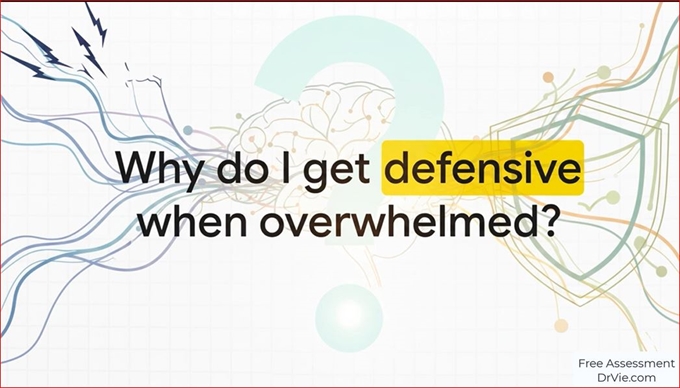
When a Small Moment Becomes Too Much: The Anatomy of the Snap
Most people think overwhelm announces itself.
That it arrives with warning signs, big emotions, or dramatic moments.
But in reality, overwhelm is quiet.
It builds slowly, almost invisibly — until one small moment becomes too much.
And whether you’re a parent trying to hold everything together at home, a partner navigating emotional load, a worker under constant operational pressure, or a leader responsible for a team, the experience is surprisingly similar.
The snap doesn’t come from the moment itself.
It comes from everything that happened before it.
The Invisible Load We Carry
Every day, we perform a kind of internal labor that no one sees:
- interpreting tone
- anticipating reactions
- smoothing conflict
- adjusting to others
- absorbing emotional weather
- trying not to spiral
- staying composed while carrying more than we show
This internal processing is universal.
It happens in homes, in workplaces, in relationships, on shop floors, in boardrooms, and in quiet moments alone.
And it’s this invisible load — not the visible tasks — that fills the system.
By the time a small moment arrives, the nervous system is already at capacity.
- That’s why the snap feels disproportionate.
- It’s not about the moment.
- It’s about the accumulated strain behind it.
What Actually Happens Inside Us
When we talk about “snapping,” we’re not talking about a meltdown.
We’re talking about the micro‑reaction:
- the sharp tone
- the fast reply
- the sudden shutdown
- the withdrawal
- the shift in energy you notice immediately
It’s the moment you think, “Why did I react like that?”
From a nervous system perspective, the snap is a capacity signal — not a character flaw.
Your system has been:
- interpreting
- adjusting
- absorbing
- performing steadiness
- managing emotional and cognitive load
And then something small — a question, a request, a comment, a noise, a delay — tips the balance.
The snap is your system saying:
“I’m full.”
For Personal Growth Readers
This moment often shows up in relationships, parenting, daily life, and internal dialogue.
You’re not snapping because you’re “too sensitive.”
You’re snapping because you’ve been carrying too much without noticing.
Your system is trying to protect you.
For Leadership + Workplace Readers
In professional environments, the snap has real implications for communication, trust, safety, and performance.
Leaders, managers, and workers don’t snap because of the task in front of them.
They snap because of the cognitive strain behind them.
And when a system is overloaded:
- tone changes
- patience thins
- decision‑making narrows
- safety awareness drops
- emotional bandwidth collapses
This isn’t “attitude.”
It’s human performance under strain.
Understanding this is essential for leadership, team dynamics, and operational safety.
The Moment Before the Snap
Across both personal and professional contexts, the most important part of the snap isn’t the reaction — it’s the moment before it.
There is always a signal:
- a tightening in the chest
- a shift in breathing
- a drop in patience
- a spike of irritation
- a sudden sense of “too much”
- a desire to withdraw
- a feeling of being cornered or overloaded
Most people miss these signals because they’re subtle.
But once you learn to recognize them, you can intervene before the snap happens.
This is the heart of emotional regulation, nervous system literacy, and sustainable leadership.
Why This Matters
Because the snap moment is not about weakness.
It’s about capacity.
And capacity is not fixed — it’s influenced by:
- sleep
- emotional load
- cognitive strain
- relational pressure
- workplace demands
- environmental stress
- internal expectations
- unprocessed frustration
- chronic micro‑stressors
When you understand your capacity signals, you gain access to a different kind of power:
The ability to stay steady in moments that used to overwhelm you.
Finding Your Clearing Again
There’s a clearing near Mirror Wood Marsh that I return to often.
- It isn’t marked on any map.
- It isn’t dramatic or grand.
It’s just a quiet opening in the trees where the light falls a certain way, and the world feels a little more honest.
It’s the place where I strongly sense that nature doesn’t teach through instruction —
it teaches through presence.
And presence is exactly what we lose when we’re on the verge of snapping.
The work — whether personal or professional — is learning how to find that clearing again inside ourselves.
Not by escaping life, but by noticing the signals that tell us we’re nearing capacity.
When you understand the anatomy of the snap, you can meet yourself — and others — with more clarity, steadiness, and compassion.


Free Course: Understanding Your Frequency
If you want to understand your own patterns — the early signs your system sends before you snap, withdraw, or shut down — we created a free course on YouTube that walks you through the entire Frequency Framework.
It’s designed for both:
- personal growth
- leadership + workplace performance
You’ll learn:
- how your nervous system processes pressure
- why certain moments overwhelm you
- how to identify your personal “capacity signals”
- how to stay steady under stress
- how to rebuild your baseline frequency
- 👉 Free Course on YouTube
Your Next Step
Here are some ways to deepen your awareness and begin shifting into alignment:
Substack — weekly insights for conscious, future‑ready living
Weekly Podcast — discussions and deep learning capsules on the Resonance Clarity Framework
Resonance Clarity Assessment free personal transformation— identify your current mind‑state in minutes with this free assessment and quick downloadable reset.
- Leadership Frequency Assessment Free — identify your current mind‑state in minutes with this free assessment and quick downloadable reset.
Programs & Corporate Training — structured pathways for aligned leadership, personal evolution, and team coherence